
Investing For Beginners: How to Start Investing with Little Money
You don’t need to be rich to start investing. Here’s a complete beginner’s guide to how investing works, what to buy first, and how to grow your money over time.
Investing can feel intimidating — especially when you're starting out with limited money and limited knowledge. The financial world is full of jargon, conflicting advice, and stories of people who lost everything in the stock market. It's no wonder so many people put it off indefinitely.
But here's the truth: the biggest investing mistake most people make is not starting. Time in the market is one of the most powerful wealth-building forces available to ordinary people — and every year you wait is a year of compounding growth you can never get back.
This guide will walk you through everything you need to know to start investing with little money, no prior experience, and a clear head.
Why Should You Invest at All?
Keeping your money in a savings account feels safe — and for your emergency fund, it absolutely should be there. But savings accounts rarely keep pace with inflation. If inflation is running at 3% per year and your savings account pays 1%, you're effectively losing purchasing power every year your money sits there.
Investing puts your money to work. Over time, the returns from a well-invested portfolio can significantly outpace inflation and grow your wealth in ways that a savings account never could. The stock market, for example, has historically returned an average of around 7–10% per year over the long term — far above what any standard savings account offers.
You don't need to be rich to invest. You need to start.
Key Investing Concepts Every Beginner Should Know
Compound Interest
Compound interest is often called the eighth wonder of the world — and for good reason. It means you earn returns not just on your original investment, but on all the returns you've already accumulated. Over time, this creates a snowball effect where your money grows faster and faster.
For example: $1,000 invested at a 7% annual return becomes $1,967 after 10 years, $3,870 after 20 years, and $7,612 after 30 years — without adding another penny. Add regular monthly contributions and the numbers become even more dramatic.
Risk and Return
In investing, risk and return are directly related. Higher potential returns almost always come with higher risk. Stocks offer higher long-term returns than bonds, but they're also more volatile — their value can drop sharply in the short term. Understanding your risk tolerance — how comfortable you are with seeing your investment value fluctuate — is an important part of building a portfolio that suits you.
Diversification
Diversification means spreading your investments across different assets, sectors, and geographies so that a single bad investment doesn't wipe out your portfolio. It's the investing equivalent of not putting all your eggs in one basket. A diversified portfolio reduces risk without necessarily reducing long-term returns.
Time Horizon
Your time horizon is how long you plan to keep your money invested before you need it. The longer your time horizon, the more risk you can afford to take — because you have time to ride out market downturns and wait for recovery. If you're investing for retirement 30 years away, short-term market drops matter far less than if you need the money in two years.
Before You Start Investing: Get These in Order First
Investing is important — but it shouldn't come before these financial foundations:
- Clear high-interest debt first. If you have credit card debt at 20% interest, paying it off is a guaranteed 20% return. No investment reliably beats that.
- Build an emergency fund. Have three to six months of essential expenses saved in an accessible account before investing. This ensures you won't need to sell investments at a loss during a personal financial crisis.
- Have a budget in place. Only invest money you can afford to leave invested for the long term. Never invest money you might need next month.
Once these are in order, you're ready to start investing.
Types of Investments for Beginners
Stocks (Shares)
When you buy a stock, you're buying a small ownership stake in a company. If the company grows and becomes more valuable, your shares increase in value. Some companies also pay dividends — regular cash payments to shareholders. Stocks offer the highest long-term returns of common asset classes, but also the highest short-term volatility.
Bonds
Bonds are essentially loans you make to a government or company in exchange for regular interest payments and the return of your principal at the end of the bond's term. They're lower risk than stocks and lower return. Bonds are typically used to balance a portfolio and reduce overall volatility.
Index Funds
An index fund is a type of investment fund that tracks a market index — like the S&P 500, which represents the 500 largest companies in the US. Instead of picking individual stocks, you buy a small piece of all of them at once. Index funds are widely recommended for beginners because they're diversified by design, low cost, and have historically outperformed the majority of actively managed funds over the long term.
ETFs (Exchange-Traded Funds)
ETFs are similar to index funds but trade on the stock exchange like individual shares, meaning you can buy and sell them throughout the trading day. They typically have low fees and offer instant diversification. Many beginner investors start with ETFs that track broad market indices.
Mutual Funds
Mutual funds pool money from many investors and are managed by a professional fund manager who selects the investments. They offer diversification but typically come with higher fees than index funds or ETFs. Some are actively managed (trying to beat the market), others passively track an index.
How to Start Investing With Little Money
Step 1: Decide How Much You Can Invest
You don't need thousands to start. Many platforms allow you to begin investing with as little as $1–$10. Decide on a monthly amount you can consistently invest — even $25 or $50 per month is a meaningful start. The habit and consistency matter more than the amount in the early stages.
Step 2: Choose an Investment Account
The type of account you use matters, particularly for tax purposes. Common options include:
- Brokerage account — a standard investment account with no contribution limits but no special tax advantages
- Retirement account (401k, IRA, ISA, pension) — tax-advantaged accounts designed for long-term retirement saving. Contribute to these first if you can, especially if your employer matches contributions
Step 3: Choose a Platform or Broker
Look for a platform that suits your needs as a beginner. Key things to look for:
- Low or no account minimums
- Low trading fees or commission-free trades
- Access to index funds and ETFs
- A clean, easy-to-use interface
Popular beginner-friendly platforms include Fidelity, Vanguard, and Charles Schwab (US-focused), Freetrade and Trading 212 (UK), and platforms like Bamboo or Trove for African investors.
Step 4: Start Simple — Buy a Broad Index Fund or ETF
For most beginners, the smartest first investment is a low-cost index fund or ETF that tracks a broad market index like the S&P 500 or a global index. You get instant diversification across hundreds or thousands of companies, low fees, and historically strong long-term returns — without needing to research individual stocks.
Step 5: Invest Consistently and Don't Panic
Set up a regular monthly investment — even a small one — and stick to it regardless of what the market is doing. This strategy, called dollar-cost averaging, means you buy more shares when prices are low and fewer when prices are high, reducing the impact of market volatility over time.
When the market drops — and it will, periodically — resist the urge to sell. Market downturns are normal and temporary. Panic selling locks in losses. Long-term investors who stay the course consistently outperform those who try to time the market.
Common Beginner Investing Mistakes to Avoid
- Waiting until you have "enough" money to start. There is no perfect amount. Start with what you have.
- Trying to pick winning stocks. Even professional fund managers rarely beat the market consistently. Index funds beat most active stock pickers over the long term.
- Checking your portfolio every day. Short-term fluctuations are noise. Looking too often leads to emotional decisions that hurt returns.
- Investing money you might need soon. Only invest money you can leave untouched for at least three to five years.
- Following hot tips and trends. By the time an investment is trending on social media, the best gains are usually already gone.
The Bottom Line
Investing is not just for the wealthy or the financially sophisticated. It's for anyone who wants to build long-term wealth and stop letting inflation erode the value of their savings.
Start small. Start simple. Stay consistent. A broad index fund, a long time horizon, and regular contributions will take most people further than any complex investment strategy ever could.
The best time to start investing was yesterday. The second best time is today.
Are you just getting started with investing, or do you have questions about where to begin? Drop them in the comments — we're happy to help.
 Nathaniel_Adamu
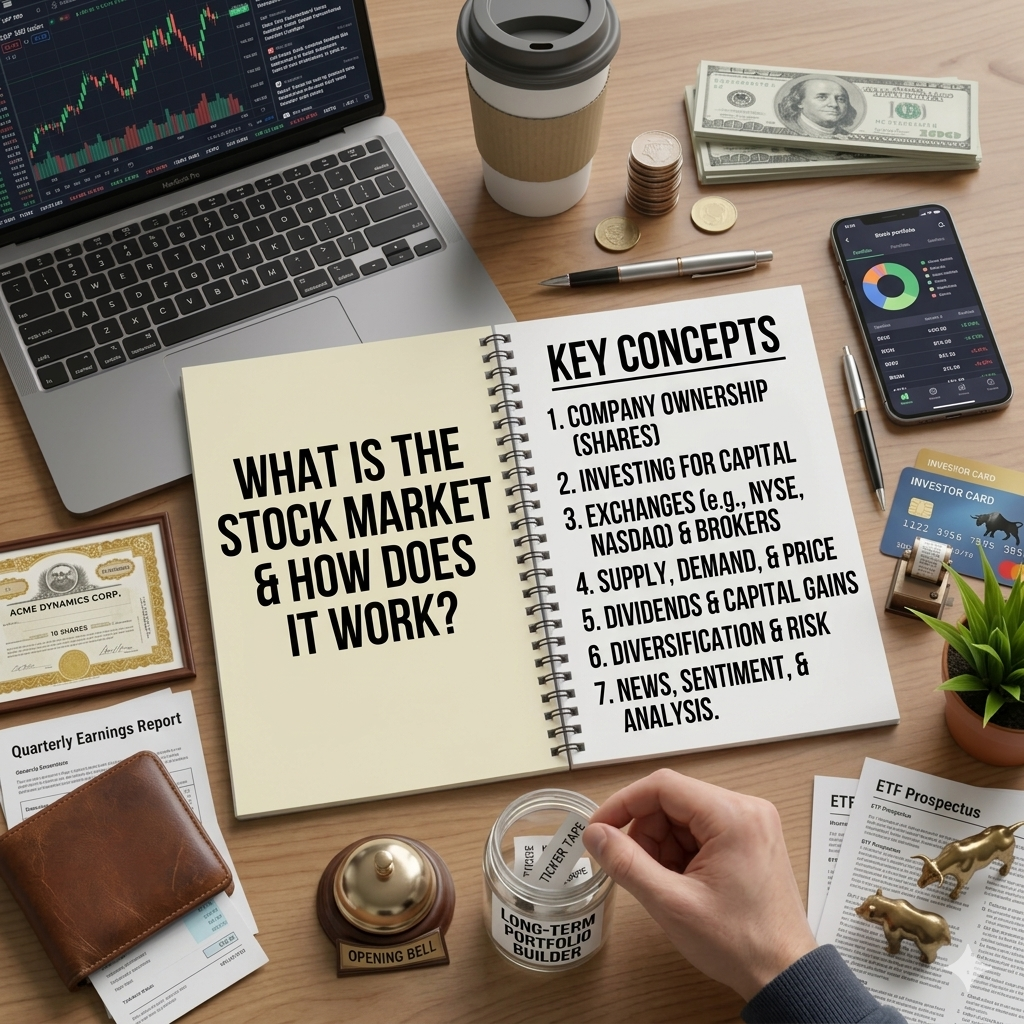 Smart Investing
0 Comments
No comments yet. Be the first to comment!
Leave a comment
Trending News



Newsletter
Stay updated with the latest personal finance and money tips.