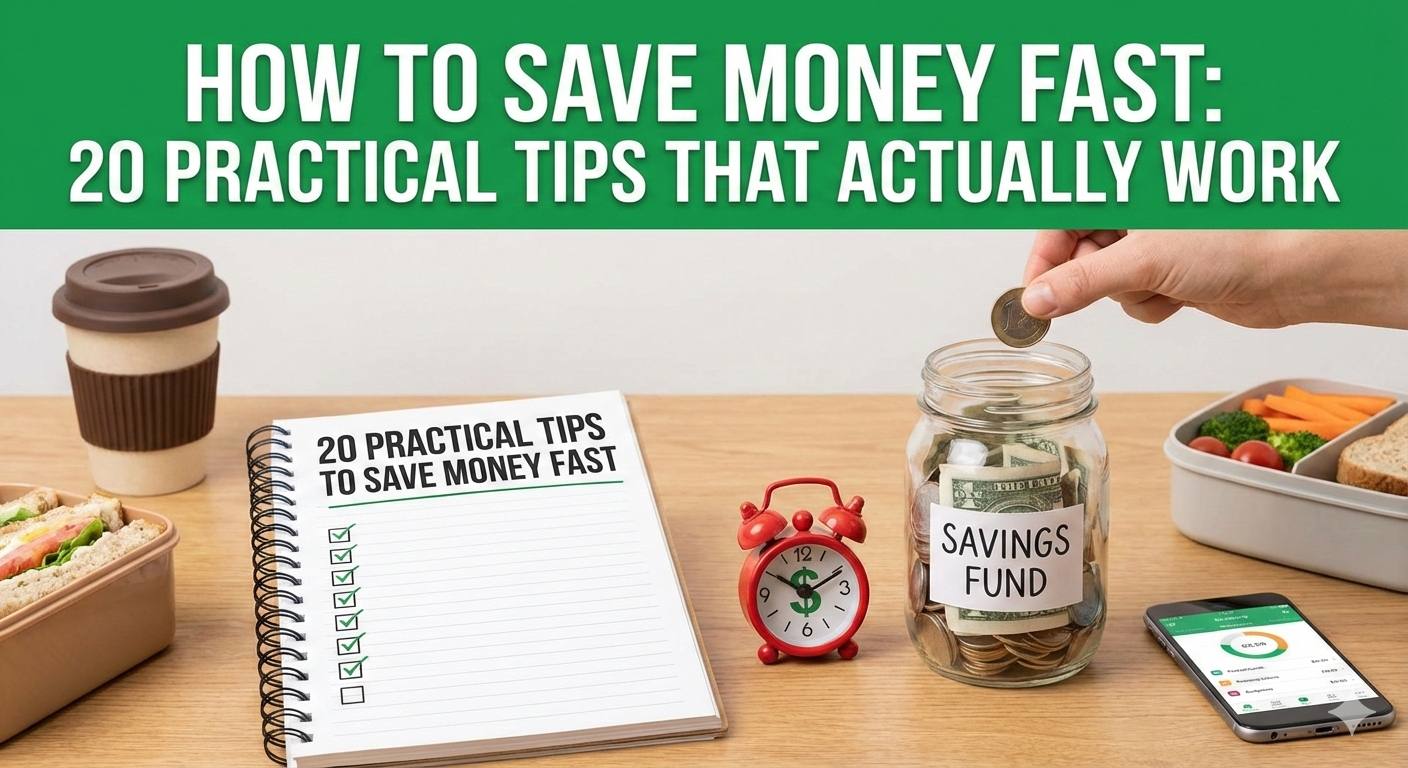
How to Save Money Fast: 20 Practical Tips That Actually Work
Want to save money fast? These 20 practical, proven tips will help you cut expenses, build savings, and take control of your finances — starting today.
Let's be real — saving money sounds easy until you actually try to do it. Life gets in the way. Expenses pile up. And somehow, no matter how much you earn, there never seems to be anything left at the end of the month.
The good news? You don't need a huge income or a dramatic lifestyle overhaul to start saving. You just need the right strategies — and the discipline to follow through.
In this post, we've put together 20 practical, no-fluff tips to help you save money fast, no matter where you are in the world or what your income looks like. Whether you're building an emergency fund, saving for a big goal, or just trying to stop living paycheck to paycheck — this guide is for you.
First: Why Most People Struggle to Save
Before diving into the tips, it helps to understand why saving is hard in the first place. Most people don't fail at saving because they're reckless with money. They fail because:
- They have no clear savings goal to motivate them
- They save whatever is "left over" — which is often nothing
- Small, invisible expenses drain their income without them noticing
- They never track where their money is actually going
The tips below are designed to fix exactly these problems. Let's get into it.
Tips 1–5: Change How You Think About Saving
1. Pay Yourself First
Don't wait until the end of the month to save whatever is left. There usually won't be anything left. Instead, as soon as money comes in, transfer a set amount straight into savings — before you spend a single cent. Even 5–10% of your income makes a significant difference over time.
2. Set a Specific Savings Goal
"I want to save more money" is not a goal. "I want to save $1,000 in 3 months for an emergency fund" is a goal. Specificity creates motivation. Write down exactly what you're saving for, how much you need, and by when. Keep it somewhere visible.
3. Automate Your Savings
Willpower runs out. Automation doesn't. Set up an automatic transfer from your checking account to your savings account on payday. When saving happens automatically, you adapt your spending to what's left — without the mental battle every month.
4. Track Every Naira, Dollar, or Pound You Spend
You can't fix what you can't see. For at least one week, write down every single purchase — no matter how small. Most people are shocked when they do this. Awareness alone often leads to immediate behaviour change.
5. Separate Your Savings From Your Spending Money
Keep your savings in a separate account — ideally one that's slightly inconvenient to access. Out of sight really is out of mind. If your savings sit in your main account, you'll spend them.
Tips 6–10: Cut Your Biggest Expenses
6. Audit Your Subscriptions
Streaming services, gym memberships, apps, magazines — these add up to hundreds per year, often for things you barely use. Go through your bank statement right now and cancel anything you haven't used in the past 30 days. You'll likely free up more money than you expect.
7. Slash Your Food Bill
Food is one of the biggest discretionary expenses for most people. A few changes make a noticeable difference: meal plan for the week before you shop, cook at home more often, bring lunch to work, and avoid shopping when hungry. Buying in bulk for staples you use regularly also cuts costs significantly.
8. Reduce or Eliminate Eating Out
Eating out regularly is one of the fastest ways to drain a budget. Even cutting restaurant spending in half can free up a surprising amount of money each month. If you love eating out, keep it as a planned, budgeted treat — not a daily habit.
9. Review Your Phone and Internet Plans
Most people haven't reviewed their mobile or internet plan in years and are overpaying for more than they need. Call your provider and ask for a better deal, or switch to a cheaper competitor. This takes one phone call and can save you money every single month.
10. Renegotiate Regular Bills
Insurance, utilities, internet, rent — many of these are more negotiable than you think. Research competitor rates, call your current provider, and ask what they can do for you. The worst they can say is no. The best case is you save money immediately with zero lifestyle change.
Tips 11–15: Spend Smarter on Everyday Life
11. Use the 24-Hour Rule Before Buying
Impulse purchases are budget killers. Before buying anything non-essential, wait 24 hours. Most of the time, the urge passes and you realise you didn't actually want it that badly. For larger purchases, extend the wait to a week.
12. Buy Generic and Store Brands
For everyday items like groceries, cleaning products, and medications, generic brands are often identical in quality to the name-brand version — at 20–40% less cost. Test a few and see for yourself. For most items, you won't notice the difference.
13. Use Cashback and Discount Apps
There are apps and browser extensions that automatically find promo codes, cashback offers, and discounts when you shop online. For purchases you're already making, this is literally free money. Popular options include Honey, Rakuten, and various bank-linked reward programmes.
14. Buy Second-Hand Where Possible
Clothes, furniture, electronics, books, sports equipment — all of these are available second-hand at a fraction of the original price. Platforms like Facebook Marketplace, eBay, Vinted, and local thrift stores are goldmines. One person's unwanted item is another person's bargain.
15. DIY Before You Pay Someone
YouTube has tutorials for almost everything — basic home repairs, car maintenance, cooking, even simple plumbing. Before automatically calling a professional, check whether it's something you could safely do yourself. The savings can be significant, and you'll gain a useful skill in the process.
Tips 16–20: Build Long-Term Saving Habits
16. Try a No-Spend Challenge
Pick a weekend — or even a full week — where you commit to spending nothing beyond absolute essentials. It resets your spending mindset, shows you how much discretionary spending you do out of habit, and gives your savings a quick boost. Many people do this monthly.
17. Save All Windfalls
Tax refunds, bonuses, birthday cash, freelance payments, unexpected income — resist the temptation to spend it. Instead, save at least 50–100% of any windfall. Since you weren't counting on it, you won't miss it. These occasional boosts can accelerate your savings dramatically.
18. Increase Your Income — Even a Little
Sometimes the fastest way to save more is to earn more. A small side hustle — freelancing, selling unused items, tutoring, or offering a skill online — can generate extra income that goes straight into savings. Even an extra $100–$200 a month adds up to $1,200–$2,400 per year.
19. Review Your Budget Every Month
A budget is not a set-it-and-forget-it document. Your expenses and income change. Reviewing your budget once a month keeps you on track, helps you catch problem areas early, and gives you a chance to redirect money toward your goals. It takes 15 minutes and is one of the highest-value financial habits you can build.
20. Celebrate Small Wins
Saving money is a long game. If you hit a savings milestone, acknowledge it. Tell a friend. Treat yourself to something small and free — a walk, a favourite home-cooked meal. Celebrating progress reinforces the habit and keeps you motivated for the next milestone.
Quick Reference: 20 Tips at a Glance
Mindset & Systems:
- Pay yourself first
- Set a specific savings goal
- Automate your savings
- Track every expense
- Separate savings from spending money
Cut Big Expenses:
- Audit subscriptions
- Slash your food bill
- Reduce eating out
- Review phone and internet plans
- Renegotiate regular bills
Spend Smarter:
- Use the 24-hour rule
- Buy generic and store brands
- Use cashback and discount apps
- Buy second-hand
- DIY before paying someone
Long-Term Habits:
- Try a no-spend challenge
- Save all windfalls
- Increase your income
- Review your budget monthly
- Celebrate small wins
The Bottom Line
Saving money fast isn't about depriving yourself or living like a monk. It's about being intentional — knowing where your money goes, making smart decisions, and building habits that work for your life.
You don't need to implement all 20 tips at once. Start with three or four that feel most relevant to your situation. Track the difference after one month. Then add more.
Small changes, done consistently, lead to big results. Your future self will thank you.
Which of these tips are you going to try first? Let us know in the comments below!
 Nathaniel_Adamu
Related Posts
 Budgeting & Saving
 Budgeting & Saving
 Budgeting & Saving
0 Comments
No comments yet. Be the first to comment!
Leave a comment
Follow Us
Trending News



Newsletter
Stay updated with the latest personal finance and money tips.